Showing posts with label interactive TV. Show all posts

Thursday, July 19, 2012

Your Palm as Remote Controller (Video and Links)

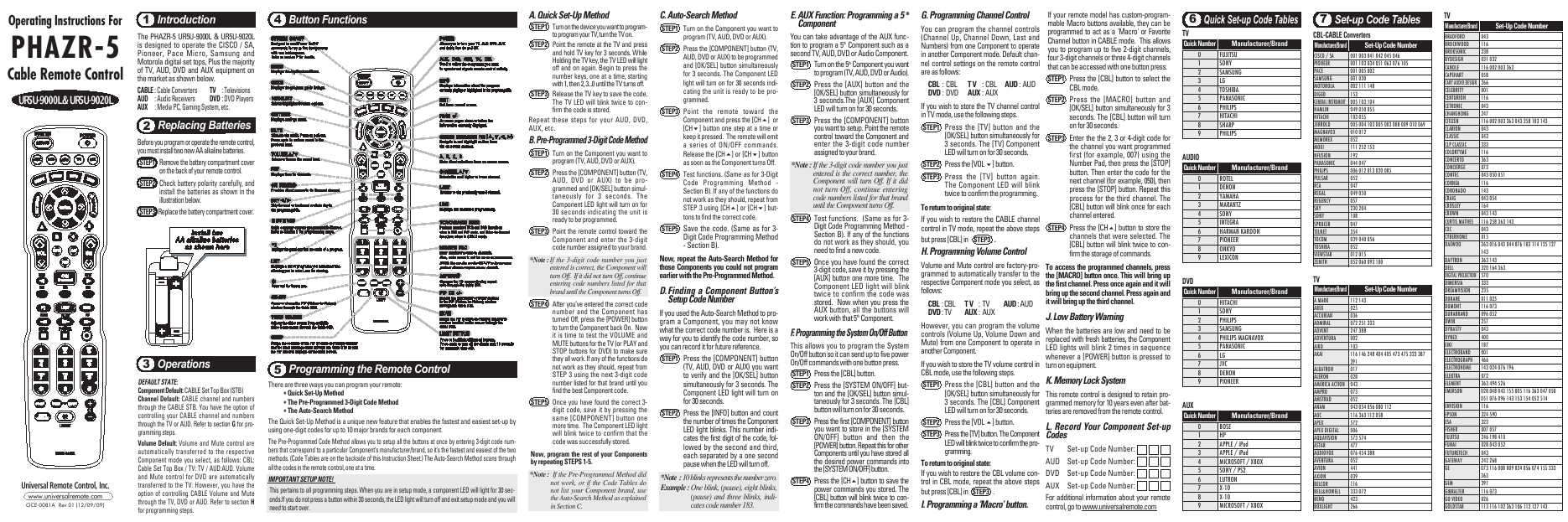
Traditional remote controls for televisions and home media centers are particularly frustrating to use, in my opinion.  There are too many buttons, the buttons are too small, and it is easy to mess it all up.  (I've touched on this topic in a number of blog posts, such as UX of ITV: The User Experience and Interactive TV (or Let's Stamp Out Bad Remote Controls) and others, linked at the end of this post.)


There is hope for the future!  I'm happy to share a video about a method of remote control that might make interacting with my TV less annoying...and possibly pleasant! 


Researchers at the Technical University of Darmstadt have been working on a way for people to control their TV without a remote or hand-held device.  I think they are on the right path. The video shows how UI elements, mapped to the hand, can be touched, with accuracy, to interact eyes-free with a large-screen TV.  This work won the Best Paper award at EuroITV'12.


For more details, see Leveraging the Hand Surface as and Eyes-free TV Remote Control and the references below:
Niloofar Dezfuli, Mohammadreza Khalilbeigi, Jochen Huber, Florian Müller, and Max Mühlhäuser. 2012. PalmRC: Imaginary Palm-based Remote Control for Eyes-free Television Interaction. In Proceedings of the 10th International Conference on Interactive Television (EuroITV '12). ACM, New York, NY, USA, to appear. 


Niloofar Dezfuli, Mohammadreza Khalilbeigi, Jochen Huber, Florian Müller, and Max Mühlhäuser. 2012. Leveraging the palm surface as an eyes-free tv remote control. In Proceedings of the 2012 ACM annual conference extended abstracts on Human Factors in Computing Systems Extended Abstracts (CHI EA '12). ACM, New York, NY, USA, 2483-2488. http://doi.acm.org/10.1145/2223656.2223823

SOMEWHAT RELATED
Oh! No! Sony's "Mother of Remote Controls" for Google TV
Interactive Multimedia Across Platforms and Screens: Adobe's Open Screen Project; MEX Mobile User Experience Manifesto... (Please don't annoy the user!)
Usability of a Remote Control
Quick Link:  The Remote - Death by Voice Control?

Friday, August 19, 2011

Role of Data in Interactive Multiplatform Storytelling, via iTVT (video and links)


There is a lot of things going on in the field of interactive multi-platform media!

The following videos from iTVT's StoryCentric video column are worth taking the time to abosrb. In the videos, Brian Seth Hurst, CEO of The Opportunity Management Company, interviews Gunther Sonnenfeld, SVP of Cultural Innovation and Applied Technology at Omnicom-subsidiary RAPP. The role of data in interactive multi-platform storytelling is the main focus of their discussion. 


RELATED

According to the iTVT website, "StoryCentric focuses on the business, technology and art of interactive storytelling, and highlights new technologies and other industry developments that have the potential to fundamentally change the way we create and interact with stories and narratives--in television and beyond."

iTVT (Interactive TV Today)
New Edition of StoryCentric Focuses on the Role of Data in Multiplatform Storytelling
Tracy Swedlow, iTVT 8/4/11
New Edition of StoryCentric Features Seth Hurst's Interview with RAPP's Gunther Sonenfeld Tracy Swedlow, iTVT, 8/18/11

A Literacy of the Imagination (Gunther Sonnenfeld's Blog)

Monday, January 31, 2011

Sunday, October 31, 2010

Microsoft is acquiring Canesta, Inc., a developer of 3-D electronic perception technology for natural user interaction, gaming, and more.

Microsoft to Acquire 3-D Chip Firm Canesta
Michael Baron, TheStreet 10/29/10

Thanks to Harry Van Der Veen, of NUITEQ, for this link!

RELATED
The following video is from the Canesta3D YouTube channel. It demonstrates the 3D input sensor in action, with four people moving around in a living room. The chip used in the system depicted in the video was the precursor to the current chip, called the "Cobra 320x200".


Below is a demo of gesture interaction using Canesta3D technology to control and select information and content on a large display.  In my opinion, this will change the way we interact with our TV's, at least for those of us who hate using bad remotes!  Microsoft's acquisition of Canesta is good news, especially if they allow this technology to be used by the masses.   I'm pretty sure it has the capability of supporting  interaction with HD TV's are internet-ready, and can support GoogleTV, LeanBack, and Vimeo's Couch Mode.


Canesta Announces Definitive Agreement to be Acquired by Microsoft
Press Rease, 10/29/10, Canesta

About Canesta (From the Canesta website)
"Canesta (www.canesta.com) is the inventor of revolutionary, low cost electronic perception technology and leading provider of single chip CMOS 3-D sensors that fundamentally change the relationship between devices and their users. This capability makes possible true 3-D perception as input to everyday devices, rather than the widely understood 3-D representational technologies as output. Canesta’s 3-D input technology, based upon tiny, CMOS 3-D imaging chips or “sensors”, enables fine-grained, 3-dimensional depth-perception in a wide range of applications. Products based on this capability can then react on sight to the actions or motions of individuals and objects in their field of view, gaining levels of functionality and ease of use that were simply not possible in an era when such devices were blind. Canesta’s focus is on mass market consumer electronics, but many applications exist in other markets as well. Canesta is located in Sunnyvale, CA. The company has filedin excess of fifty patents, 44 of which have been granted so far."


Canesta Corporate Fact Sheet (pdf)
Videos: http://canesta.com/applications/consumer-electronics/gesture-controls

I posted some videos about Canesta's technologies on the following post. There are two videos that show Canesta's 3D depth camera works on a Hitachi flat-panel display: Interactive Displays 2009 Conference

For more information about interactive TV, GoogleTV, Leanback and Couch Mode, see the second section of my recent post:
Philipp Geist: Blending the Physical with the Digital;  Google TV/Leanback, Vimeo's new Couch Mode, oh..and ViewSonic's 3D (glasses-less) pocket camcorder...

Tuesday, October 12, 2010

Oh! No! Sony's "Mother of Remote Controls" for Google TV. 74 Buttons and Counting.

Today we switched from DISH to Time Warner Cable, and tonight I had to battle with a new remote control, the UR5U-8780L.  The experience with this remote led me to search for something better. What a coincidence!  In this day and age of touch-screens,  I was hoping for something better than....


Sony's Mother of Remote Controls!

-From the SonyStyle website: Television, meet internet.

I first learned of this complex addition to the world of TV/Internet surfing from an article and a video in a recent article in Engadget:  Sony's Google TV controller outed on ABC's Nightline (video) Ross Miller,10/5/10.  Harry Brignull also posted about the new controller- Sony, Sony, what have you done?
(Harry is a UX Consultant at Madgex, and author of the 90percent of everything blog.)


ABC Video, via engadget

It is 2010, and with TVs connected to the internet, we'll be interacting with content in ways we could only dream of in the recent past.  Interactive TV is here.  Do I really have to push a lot of buttons in order to have the best "interactive" experience?  


OTHER OPTIONS
Xfinity Remote Prototype for the iPad


Turn Your iPhone into a TV Remote Samuel Axon, Mashable/Apple
L5 Remote: Turn your iPhone or iPod touch into a universal remote control:
L5 remote


Not Yet Available:  Vizio's XRT100 touchscreen remote
Vizio_touch_remote.jpg

My Fancy New Remote, Instructions Included:

Sunday, September 5, 2010

Planet in Action's 3D Sound in Google Earth: Part of the Interactive, Touchable 3D Picture (and thoughts about how this might play out on interactive whiteboards in education)

I came across a link to Planet in Action's video demonstration of 3D sound in Google Earth, thanks to a post by Nate Torkington in O'Reilly Radar.  WOW!   


The company shows that a 3D sound engine works nicely within the Google Earth environment.  Planet in Action tweaked the Soundmanager2 library from schillmania.com, resulting in a sound3D javascript object that can be used to program geo-located sounds in Google Earth.


The 3D sound concept, in my opinion, will be useful in creating immersive interactive educational experiences, especially if students have access to newer interactive whiteboards with decent sound systems.    


Below is the video from Planet in Action, along with a bit of promotional information:

The video is of a port in San Sabastian, Spain.  The "sound landscape" is realistic, and a range of sounds, from various spots in the scene, can be heard during the exploration.  


"Google Earth is a highly detailed 3D representation of our entire planet.  Rather than just looking at it, why not play on it!  PlanetInAction.com brings you top quality ideas, applications and concepts that will let you experience your planet in a whole new way." -Planet in Action


Thoughts:


My bet is that this concept will play out very well in the future in family rooms outfitted with large displays and decent surround sound systems. 

Why?  No need to explain.  Just take a look at what is going on with 3D TV and film,  3D HD gaminginteractive TVinternet-enabled large HD TVs, Google's "Lean Back" concept, and the "Slow Media" movement.


By the way, Planet in Action's work strikes a chord in me.  One of my HCI team travel planning projects that used Google Earth in the demonstration prototype.  We focused on cruise travel planning, mostly because I had lots of pictures and video clips from my cruise trips vacations and other travels.  I even worked on part of the project while I was ON a cruise ship.  (That was before the economic downturn.)   Below is a video of a cruise ship model that Planet in Action created for a cruise line, for use in Google Earth:

Celebrity Constellation Virtual Fly-by


SOMEWHAT RELATED


As I mentioned in my previous post, "Video Experiments: Sea Life Medley - Extended version with music",  I'm experimenting with some ideas to create interactive educational video clips for future use on higher-resolution interactive whiteboards and other large touch-screen surfaces.   


Part of my motivation stems from an immediate need for "touchable" content for the students I work with who have more significant disabilities, including autism- and of course, my colleagues. All of the classrooms in the program have IWBs- mostly brand-new SMARTBoards - - we also have a SMARTTable that is begging for more content.


As I worked with students using my video clips and a new SMARTboard, I noticed that students have a strong desire to touch what they see on the screen.  If they could stop the video and further explore item of interest, for example, the jellyfish in the above picture, it would be great.  


Imagine putting your hand on the jellyfish, and having the power to explore it as a 3D model! If you are a grad student or researcher who is working on this concept, or something related, please let me know.


Getting back to the 3D landscapes/soundscapes in Google Earth- this is something that I'd like to try at school.  I'm wonder if PlanetinAction allows for touch-screen interaction so that students who are at the SMARTBoard can easily explore the 3D-sound enabled scenes in Google Earth.

Saturday, September 4, 2010

Video Experiments: Sea Life Medley: Extended version with music

I'm playing around with my sea life video clips to get ideas for creating interactive educational videos in the future for use on interactive whiteboards and other large touch-screen surfaces.

Here's my YouTube description:
This is a medley of several video clips taken of sea life, mostly living in aquariums. Awesome jellyfish can be viewed from 1:34- 3:45. The music consists of clips from iMovie, and then William Orbit's "Sea Green" and "Surfin". I created this video for students I work with who have more complex disabilities, such as severe autism.

Saturday, July 17, 2010

Preview of the Official Boxee Video Streaming System: Digital Convergence in Action

In the following video, tech entrepreneur Zach Klein shows his company's official version of Boxee, a set-top box system that provides users a "plug-and-play" opportunity to view Web-based video on their televisions.


The first Boxee Box arrived from the D-Link Factory from Zach Klein on Vimeo.
Note:  Zach Klein is the co-founder of Vimeo.


Web video and content, viewed on a large-screen HD display, in the comfort of a cozy recliner or sofa, is in line with the "Slow Media" movement, as well as the concept behind Google's "YouTube Leanback" application (see links and info below).

Relax.  Share.  Interact.  Chill with your Web.

RELATED
Boxee Website
Boxee Readies Its Set-Top Box Nick Bilton, New York Times, 7/16/10
Boxee debuts Boxee Box, ready to take on Roku Jacob Brody, SocialBeat Venture, 12/7/09
Hands-On With the Boxee Set-Top Box and Remote Brian X. Chen, Wired Gadget Lab, 1/8/10
Designing for Interactive TV:  Boxee Case Study (Method)
Boxee and Digital Convergence Lynn Marentette, Interactive Multimedia Technology, 3/22/09


SOMEWHAT RELATED
Slow Media Manifesto
"The concept “Slow”, as in “Slow Food” and not as in “Slow Down”, is a key for this. Like “Slow Food”, Slow Media are not about fast consumption but about choosing the ingredients mindfully and preparing them in a concentrated manner. Slow Media are welcoming and hospitable. They like to share."
Google YouTube Leanback (Google)
YouTube Leanback offers effortless viewing (Google)
"YouTube Leanback a different way of watching videos on YouTube. Just as its name implies, YouTube Leanback is all about letting you sit back, relax and be entertained. Videos are tailored to autoplay as soon as you get started, in full screen and high definition, so watching YouTube becomes as effortless as watching TV. YouTube Leanback is simple to use, easy to navigate with your keyboard's arrow keys, and is personalized to your unique preferences."
YouTube's 'Leanback' Wants to Friend Your Television Remote Eliot Van Burskirk, Wired  7/8//10


Somewhat Related IMT Posts
All IMT posts referring to remote controls and usability (This will continue to be a problem as our digital streams converge)
Video and Links about Google TV: Another Flavor of Android - "Google TV brings everything you love about the Web to your television".
Designing for TV Screen Interaction:  Interesting IxDA Thread
Digital Convergence & Interactive Television
An Example of Convergence: Interactive TV - uxTV 2008